



Updated 2026-09-03
Waterproof backpack features and benefits: the short answer
The waterproof backpack features and benefits worth paying for are structural: a coated or laminated shell, sealed or storm-flapped zippers, taped or welded seams, a reinforced base, and a padded laptop compartment. The benefit is narrow and practical. Your laptop, notebook and printed deck arrive dry after forty minutes of September rain, repeatedly, without a rain cover.
Why do you discover your backpack isn't waterproof at the worst possible moment?
No one plans to get caught. That's the whole problem. You buy a bag in July, the page says water-resistant, you file that away as handled, and then it's the second week of September and the sky opens somewhere between the station and the office.
Take Haylie, a management consultant with a twenty-minute walk at the client end of her commute. Her bag shed the first few minutes beautifully, water beading off the face fabric. By minute twelve it had stopped beading and started soaking, and the water found the stitch lines at the shoulder straps. Her laptop survived. Her printed deck did not, and neither did the notebook she'd run the project in since March.
The real cost is rarely the bag. It's the deck you reprint at 7am. Gear Patrol makes the point plainly in its motorcycle backpack guide: water-resistant does not mean waterproof, and even a bag built from waterproof material can leak through its seams. Carryology is blunter about the marketing, warning that a bag advertised as made with waterproof materials can still let water in if it's assembled by ordinary methods.
So the useful question isn't which bag is waterproof. It's which parts of it were built to keep water out, and whether those parts match the way you actually get to work.

Water-resistant, waterproof, weatherproof: what do backpack labels actually mean?
Three words, one of which means almost nothing.
Water-resistant describes densely woven nylon or polyester. Carryology explains the mechanics clearly: these fabrics are measured in denier, and however tightly the fibres are woven, water is very small and still passes through the pores where fibres cross. Light rain often lacks the weight to push through. Sustained rain, or pressure of any kind, does. Most bags improve on this with a polyurethane, PVC or thermoplastic coating laminated to the back of the fabric, and sometimes a Teflon or wax treatment on the face so water beads away.
Waterproof is a higher bar and a literal one. In the ingress protection system used for electronics, waterproof means the item can be fully submerged, while water-resistant covers splashes and light rain. The second digit of an IP rating runs from 1, which is dripping water, up to 8, which is submersion. You need the middle of that scale for a rainy Tuesday. The top of it is for dropping your bag in a canal.
Weatherproof is not a standard. It's a word. Sometimes it signals a genuine all-conditions build, sometimes it means the fabric was sprayed and nobody wanted to commit.
Daniel, an in-house counsel who cycles twice a week, compared two bags on this basis and stopped reading adjectives. One listed a coated shell and covered zips. The other said weather-ready. He bought the one that described its own construction.


The waterproof backpack features checklist: what should you verify before you buy?
Here's the mental model. A backpack isn't waterproof or not waterproof. It's a system of six potential leaks, and you audit each one. Carryology's line is the one to keep in your head: every element of a bag needs to be waterproof for the bag to be waterproof, not just the zipper or the joints or the material.
Patrick, a finance associate, ran this in a shop in ninety seconds. He turned the bag over, checked the base, opened the zips, then pushed two fingers into the laptop compartment to feel whether it reached the bottom. He left without buying anything, correctly.

The six leak points on a waterproof backpack
In the order they matter for a work commute:
- Shell fabric: a coated or laminated construction, not just a tight weave. Ask what's on the back of the fabric, not how the front looks. - Zippers: genuinely waterproof zips, or ordinary zips under a storm flap or covered channel. A bare zip across the top panel is the most common failure point. - Seams: taped, welded, or at least designed so stitch holes aren't sitting in the water's path. - Base panel: reinforced or coated, ideally raised, because your bag spends its life on wet platforms and cafe floors. - Laptop compartment: padded, closed, and suspended above the base rather than resting on it. - Back panel and straps: these press against your jacket. Water that soaks the harness reaches your shirt whether or not the bag stayed dry.
Six passes and you have a waterproof commuting backpack. Four passes and you have a bag that's fine until the day it isn't.


How do waterproof backpack specs compare across commuter types?
Most guides stop at a features list. The more useful exercise is matching a spec profile to your commute, because a ten-minute walk and a forty-minute mixed-transit slog need different bags, and anyone buying a submersible roll-top to cross a car park is over-buying.
Four profiles cover almost everyone. The short dash needs a coated shell and a padded sleeve, little else. Mixed transit needs the full audit, because you stand exposed on platforms and set the bag down on wet floors repeatedly. Two-wheeled commutes need closure design first, since a roll-top removes the zipper problem rather than managing it. Gym and travel days need capacity and separation.
Read the table across, not down, and be honest about your own row. The right-hand column names the Maverick & Co. bag that clears the checks for each profile: the Explorer Light Backpack at 0.86 kg and 16.9 L for the short walk, the Vista Waterproof Backpack at 15.2 L and 0.93 kg for mixed transit, the Rover Roll Top Backpack at 18.7 L for two wheels, and the ProActive Waterproof Business Backpack at 19.6 L for gym and travel days.

Why is fabric construction the first waterproof feature to check on a laptop backpack?
Fabric is where the argument starts, because everything downstream is either protecting the fabric's weak points or compensating for them.
The number you'll see quoted is denier. Carryology's explanation is the clearest going: denier is a fibre-weight measure benchmarked against a single strand of silk, so 1000D fibres are thicker and heavier than 400D fibres. High denier means abrasion resistance. It does not mean waterproof. Water gets through the spaces between fibres regardless of how thick those fibres are, which is why the meaningful information is what has been done to the fabric rather than what the fabric is. A polyurethane, PVC or thermoplastic layer laminated to the back is what actually blocks water. A surface treatment is what makes it bead and roll off.
Then the part almost no gear guide addresses for professionals: how the thing looks at 9am. Gear Patrol's framing of wet-weather commuter bags is that the good ones read as day packs rather than dry-packs, with classic, understated design. That matters when you're walking into a pitch. Coated nylon with vegan leather trim delivers the same water protection as a technical shell without announcing that you were expecting weather.
Lena, an architect who presents to clients two mornings a week, spent a month with an excellent cycling pack and retired it because it looked like equipment. She wasn't wrong to care. A bag that stays home in favour of a tote on an uncertain morning protects nothing.
Zippers and seams: where does water get into a waterproof backpack first?
Three places, always the same three, in roughly this order.
Zippers first. A standard zipper has small openings between the teeth, and Carryology is explicit that water hitting those teeth gets through, which is why better bags add splash guards or cover the zip with fabric. Genuinely waterproof zips exist, cost money, and pull stiffer than the ordinary kind. If a bag claims waterproofing but runs a bare zip across the top panel, you've found the leak before you've left the shop.
Seams second. Every stitch is a hole punched through the material. Carryology notes that truly waterproof bags avoid this by welding panels together with ultrasonic or RF methods rather than sewing them, and that the technique remains fairly rare. Gear Patrol's caution runs the same way: waterproof material still leaks if the seams are vulnerable. Taped seams are the practical middle ground for a work bag.

The wet-floor problem no waterproof rating covers
Base panels are third, and this failure is self-inflicted. Your bag sits on wet train floors and pavements, and no rating covers standing water contact while you order coffee. Look for reinforced corners, a coated panel, or protective feet.
Tom, a sales director, traced the damp patch in his bag to exactly this. It never rained into the bag. He'd set it beside a puddle on a Northern Line platform for the length of a phone call, and the base wicked it up.


Does a waterproof backpack shell protect your laptop, or just the bag?
A waterproof exterior is necessary and not sufficient. What decides whether your machine stays dry is the interior architecture.
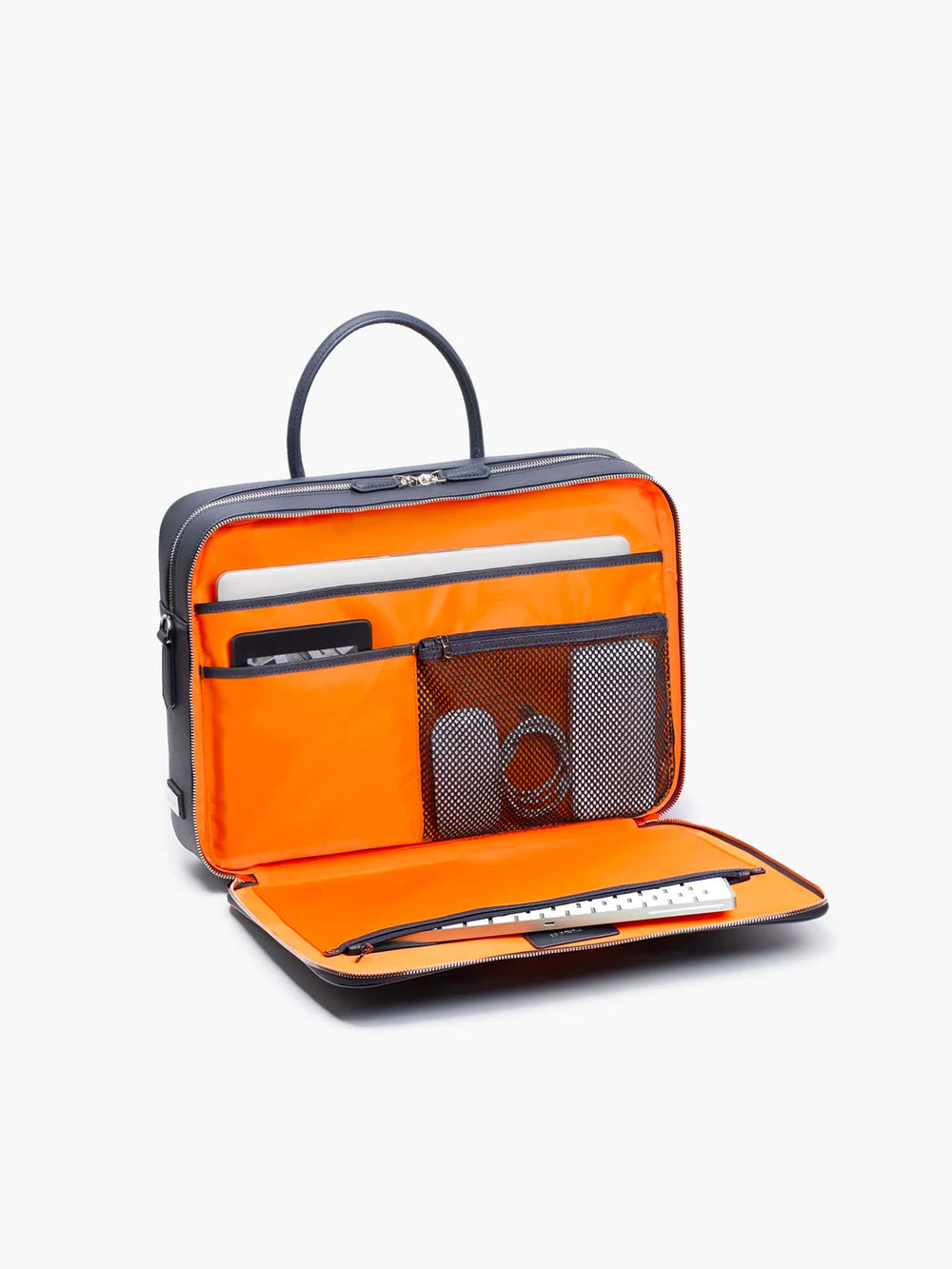
Look for three things. A padded laptop compartment, so the bag survives the drop as well as the downpour. One suspended above the base rather than sitting on it, because the bottom two centimetres are where any water that gets in will pool. And a closure on that compartment, so a wet umbrella shoved into the main cavity doesn't drip onto your keyboard. In Gear Patrol's everyday backpack testing, a reviewer rated a pack's water-resistant material and its ability to keep contents dry as arguably its best feature, which is a fair summary of what you're buying.
Then the failure mode nobody warns you about: you, carrying the water inside. A folded wet umbrella, a damp gym towel, a coffee cup with rain still on it. The shell keeps outside water out and inside water in, precisely the wrong outcome. If your bag has a separate front compartment or an external bottle slot, the umbrella lives there.
Sofia, a product manager on a train-plus-walk commute, had a bag pass every external test and still deliver a damp laptop sleeve twice in one autumn. The shell was fine. The umbrella was riding in the main compartment.

Which waterproof backpack fits your commute reality?
Now match the checklist to your morning, measured in exposure minutes.
If your exposure is a ten-minute walk at either end, you want light and coated rather than fortified. The Explorer Light Backpack weighs 0.86 kg across 16.9 L, is water-resistant, and carries a padded 16 in laptop compartment plus a luggage sleeve for the occasional flight. That's a bag you stop noticing, which is the right relationship to have on a short commute.
Forty minutes of mixed transit, standing on open platforms and setting the bag down on wet floors? You want a waterproof build rather than a treated one. The Vista Waterproof Backpack holds 15.2 L at 0.93 kg, measures 40 x 29 x 12.5 cm, and pairs a waterproof vegan leather build with a padded 16 in laptop compartment and a trolley sleeve. Carrying more? The Vista Waterproof Backpack Pro applies the same thinking at 18 L. Think of Adaeze, a lawyer with a bus-then-train commute and a 16-inch MacBook Pro she'd rather not explain to IT.


Waterproof backpacks for two wheels, gym kit and travel weeks
If you cycle or ride a scooter, closure design beats everything, because rain at speed finds any zipper. The Rover Roll Top Backpack runs an adaptive roll-top over 18.7 L of water-resistant nylon with vegan leather trim, plus a trolley sleeve for travel weeks.
If your Tuesdays involve a gym bag and an airport, separation is the feature. The ProActive Waterproof Business Backpack carries 19.6 L with two laptop compartments and a detachable shoe bag, so wet trainers never share a cavity with a laptop. And for days that switch from backpack to hand-carry outside a client's office, the Nexus Convertible 3-Way Backpack does 17.4 L in waterproof nylon with vegan leather trim.

Final check: how to audit any waterproof backpack's features and benefits
Take the checklist into the shop, or onto the product page, and run it pass or fail. No partial credit.
Ask what's on the back of the fabric. Look at whether the main zip is covered or bare. Check whether seams are taped or welded. Turn the bag over and look at the base. Put your hand in the laptop compartment and feel whether it's padded and whether it stops short of the bottom. Then wear it, and think about whether your back gets wet through the harness. If a listing won't tell you these things, that silence is your answer.
Apply it to us as readily as anyone else. The Vista Waterproof Backpack answers the audit with a waterproof build, a padded 16 in laptop compartment, a luggage sleeve and 0.93 kg across 15.2 L. The Explorer Light Backpack answers a different question at 0.86 kg and 16.9 L. Neither is right for everyone, and any brand claiming otherwise is selling rather than explaining.
Gear Patrol's advice on wet-weather bags is the sensible last word: check the forecast and pack accordingly. The best waterproof backpack for work is the one whose specification matches the minutes you actually stand in the rain. Every Maverick & Co. product page lists capacity, weight, dimensions and laptop fit, so you can run the checks yourself before you commit.
| Commute profile | Typical rain exposure | Waterproof rating to look for | Closure and zipper type | Material and construction | Laptop protection | Maverick & Co. example |
|---|---|---|---|---|---|---|
| Short urban dash (5-15 min walk each end) | Brief, intermittent | Water-resistant, coated shell is enough | Standard zips, ideally under a flap | Coated woven fabric, light build | Padded sleeve for up to 16 in | Explorer Light Backpack - 16.9 L, 0.86 kg, padded 16 in compartment |
| Mixed transit (30-45 min: walk, bus, train, wet floors) | Sustained, plus standing water contact | Fully waterproof build, not a surface treatment | Covered or waterproof zips | Waterproof vegan leather or laminated shell, structured base | Padded 16 in compartment, suspended above base | Vista Waterproof Backpack - 15.2 L, 0.93 kg, 40 x 29 x 12.5 cm, trolley sleeve |
| Two wheels (cycle or scooter, 20-40 min) | Heavy, driven rain at speed | Waterproof build with closure-first design | Roll-top, which removes the zip line entirely | Water-resistant nylon with vegan leather trim | Dedicated laptop protection inside a rolled cavity | Rover Roll Top Backpack - 18.7 L, roll-top, luggage trolley sleeve |
| Gym and travel days (office, gym, airport) | Variable, plus wet kit carried inside | Waterproof build with internal separation | Multiple zipped compartments | Water-resistant shell, compartmentalised interior | Two laptop compartments, fits up to 16 in | ProActive Waterproof Business Backpack - 19.6 L, detachable shoe bag |
Frequently asked questions
Is a water-resistant backpack good enough for a daily rain commute?
For five to fifteen minutes of walking, usually yes. A water-resistant backpack uses a densely woven fabric, often with a polyurethane or PVC coating on the back, and light rain lacks the weight to push through. Sustained rain and pressure do get through, so for thirty minutes or more of exposure you want a genuinely waterproof build with covered zips and taped seams.
What IP rating counts as waterproof for a bag?
In the ingress protection system, the second digit covers water and runs from 1, meaning dripping water, to 8, meaning full submersion. Water-resistant sits at the low end and covers splashes and light rain; waterproof means the item can be fully submerged. For commuting, the middle of that scale is enough. Most bags are not IP-rated at all, so read the construction instead.
Can you make an existing backpack waterproof?
Only partially. A spray-on durable water repellent restores beading on the face fabric and buys you a few extra minutes, but it does nothing about stitch holes or an exposed zipper, which are the usual entry points. A dry bag liner or a packable rain cover is more reliable. Neither fixes a base panel that wicks water from a wet floor.
Do waterproof zippers wear out or feel harder to use?
Yes to both, and it's a fair trade. Genuinely waterproof zips seal against a rubberised tape, so they pull stiffer than standard coil zips and can stiffen further with grit and age. Wipe the track occasionally and lubricate it with zip wax. Many commuter bags instead run a normal zip under a storm flap or covered channel, which is easier to live with daily.
Will a waterproof backpack keep a 16-inch laptop dry in heavy rain?
Only if the interior is built for it. Look for a padded compartment sized for a 16 in machine, closed rather than open-topped, and suspended above the base so it never sits in pooled water. The Vista Waterproof Backpack pairs that layout with a waterproof vegan leather build across 15.2 L at 0.93 kg. Also keep wet umbrellas in a separate compartment.