



Best Work Totes Under $300 for Commuting Professionals
Updated 2026-10-27
Best work bags under $300: the short answer
The best work bags under $300 are structured, zip-top totes with a padded sleeve sized to your exact laptop, a trolley sleeve, and an empty weight under one kilogram. At this price, closure, laptop fit and carry comfort matter more than material prestige or a recognisable logo.
Why is $300 the sweet spot for a work bag?
Ask anyone who has carried the same bag five days a week for a year what they regret, and it is rarely the money. It is the open top that let rain reach a laptop on a platform, or the strap that had worn a groove into one shoulder by Thursday.
The $300 ceiling matters because of where the curve bends. Below about $120, something has to give, and it is usually the part you only notice in month seven: an unlined base that sags into a hammock, a laptop "sleeve" that turns out to be one layer of fabric rather than padding, a zip that catches and then splits. Above $300, most of the extra buys material prestige and name recognition rather than a better commute. Between $150 and $300 is where structured construction, a genuinely padded laptop compartment, a water-resistant shell and real interior organisation all turn up in the same bag.
There is a scheduling reason too. Bloomberg reported in October 2024 that McKinsey was weighing asking its North America staff to come into the office more often, and Forbes argued the following February that leaders pushing attendance are focused on the wrong thing. Take either side of that argument and you land on the same practical fact: the bag leaves the house more often than it did, on a schedule that is less predictable.

What a $300 work bag really costs per use
Nadia, a third-year associate who goes in Tuesday through Thursday, bought a $90 tote and replaced it eight months later when the base gave out under a 15-inch laptop, a charger and a one-litre bottle. The replacement cost roughly three times as much and is now in its third year.
Cost per use is the only pricing metric worth running here. At three office days a week, a $250 tote that lasts four years costs under forty cents a day. The cheap one that lasted eight months cost more than double that, and it failed on a Tuesday morning rather than at a convenient moment.


What should a work bag under $300 actually do?
A work tote is not a handbag that happens to be large. It is equipment: loaded, carried, set down on wet pavement, opened in motion. A handful of things separate the bags that survive that from the ones that merely look the part, and none of them show up in a product photograph.

Five features every work bag under $300 needs
1. **A closure that genuinely closes.** Zip-top, or a secure magnetic flap over a zip. An open-top tote on a rainy platform is a bucket. 2. **A padded compartment sized to your actual machine.** Not "fits most laptops". A stated fit, in inches or centimetres, that matches the laptop in your hand. 3. **An empty weight under one kilogram.** Everything you own goes in on top of that number, so the bag's own weight is the only part of the load you get to choose. 4. **Organisation you can work one-handed.** Dedicated slots for phone, wallet, pens and cables, so your hand goes straight to the thing instead of trawling the main compartment. 5. **Two ways to carry, plus a trolley sleeve.** Short handles for the walk across the lobby, a shoulder strap for the ten minutes from the station, and a sleeve that slides over a suitcase handle when the day runs long.
Claire manages operations at a teaching hospital and spends part of most mornings standing on a bus with one hand on a rail. Her previous tote failed points one and four at once: she had to set it on the floor and open it two-handed to find her badge. Her current one has a zip top and a front pocket she can reach without looking, which sounds trivial until you do it two hundred and forty times a year.
Run those five against the bag you own now. If it fails two of them, that is why your commute feels heavier than it should.


Structured, slouchy or convertible: which under-$300 work bag survives a commute?
Tote is a silhouette, not a specification, and the three common interpretations behave very differently between a station and a desk.
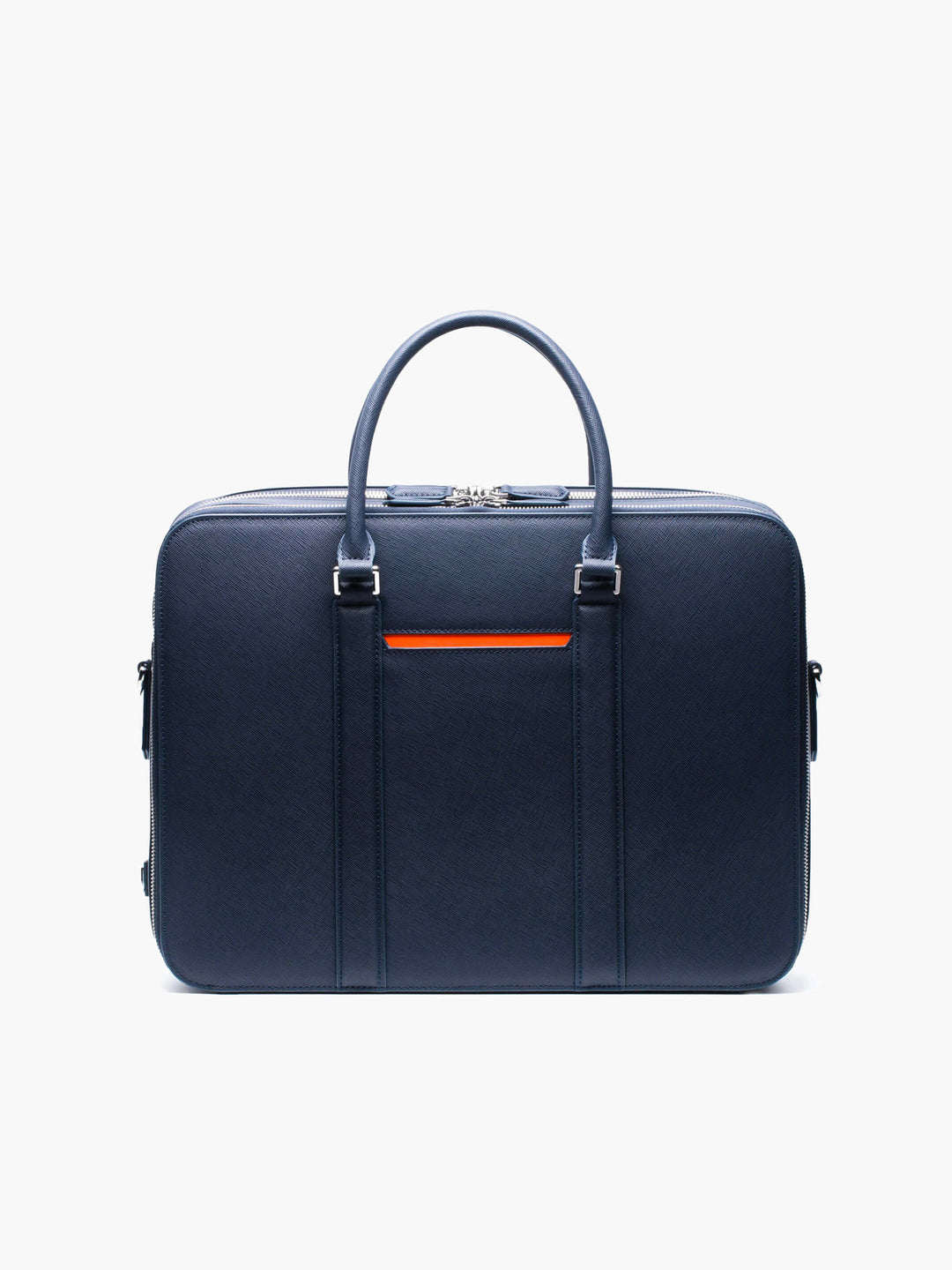
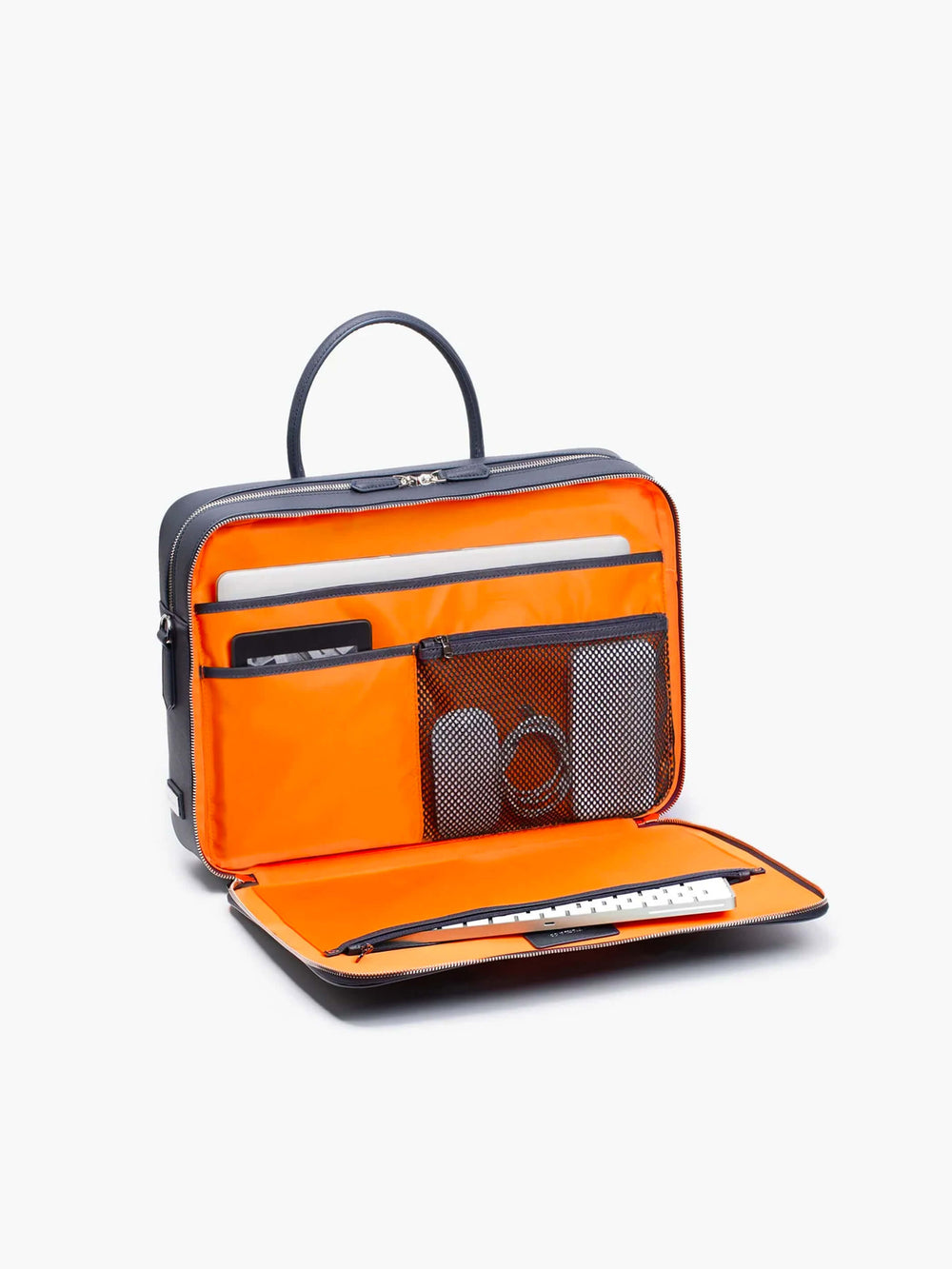
Structured totes hold a flat-sided shape whether they are full or nearly empty. A bag that holds its form protects what is inside it and stands up when you set it beside a chair rather than collapsing onto its contents. The Manhattan Leather Tote is the clearest version of this in our own line: 18 L across 41 x 39 x 13 cm, 0.83 kg empty, a padded slot for a 16-inch MacBook Pro and a separate large slot for A4 documents and a tablet, with a detachable shoulder strap for the walking legs. For someone like Priya, a strategy consultant who goes from a client's reception desk straight into a boardroom with nowhere to put her bag down, that structure is what still reads as deliberate at 4pm.
Slouchy totes are kinder against the body and more forgiving of odd-shaped loads, but they rarely protect a laptop on their own and they almost never have an internal architecture worth the name. They are a rotation bag, not a commuting bag, unless you add a sleeve.

When a convertible work bag beats a structured one
Convertible formats sit between the two. Gear Patrol has made the case for the tote that converts to a backpack as an easy-carry option for commuters, and the logic holds for anyone whose journey includes a long walk or a bike leg, where shoulder carry stops being viable somewhere past six kilograms.
The trade is formality. A bag with stowable straps will never look quite as composed across a meeting table as a structured tote. So the rule is simple: if your commute is mostly seated transit and short walks, structure wins. If it is twenty minutes on foot each way, look hard at convertible before you commit.
The best work bags under $300: our ranked picks
Ranked by how well each option handles a daily laptop commute, rather than how it photographs.
1. **Best overall for a daily laptop commute: the Alight Work Tote. 16.5 L, 0.7 kg, 40 x 31 x 18 cm, with a zip-top main compartment and a removable padded sleeve that fits a 14-inch MacBook Pro. The removable sleeve earns it the top slot: on a day with no laptop, take it out and get the full 16.5 L back. Inside there are five slip pockets, an interior zipped pocket, three card slots, two pen slots, a magnetic front pocket and a trolley sleeve. At 0.7 kg it is the lightest serious option here, which is 300 grams you get to spend on something else.
2. **Best for client-facing days: the Manhattan Leather Tote. 18 L across 41 x 39 x 13 cm, 0.83 kg empty, with a padded 16-inch laptop slot, a large A4 and tablet slot, a mesh pocket for cables, a water bottle slot and a detachable shoulder strap. Choose this over the Alight if you carry a 15 or 16-inch machine, or if the bag will be seen across a table by people forming an impression in four seconds.
3. **Best sub-$150 benchmark: a structured nylon tote.** If your budget is genuinely half the ceiling, do not buy a cheap leather look. Buy structured nylon and hold it to three non-negotiables: a stated padded sleeve in your laptop size, a full zip closure and an interior zipped pocket. Target 15 to 18 L and under 0.9 kg.
4. **Best for a long walking commute: a convertible tote-to-backpack.** Two carry modes, stowable straps, and the same padded-sleeve requirement. Worth the compromise in formality if either end of your journey runs past fifteen minutes on foot.
Gear Patrol's editors publish a running list of the bags they actually commute with, which is a useful sanity check on any shortlist. The bags people keep using tend to be the ones that solved a specific journey, not the ones that tested best in the abstract.

Best upgrade to the work bag you already own
If you love a slouchy tote and will not give it up, you do not necessarily need a new bag. The Vista Waterproof Laptop Sleeve comes in 14-inch (max device 34 x 25 x 1.7 cm) and 16-inch (max device 39 x 29 x 1.7 cm), with two front pockets, four card slots and a back handle.
Drop it into the bag you have and the laptop is protected, the charger has somewhere to live, and the handle means you can lift the sleeve out on its own when you reach a desk. It is the cheapest fix on this list and, for a lot of people, the only one they need this year.


How do you match a work bag under $300 to your working week?
The right bag is a function of your week, not your taste. Three patterns cover most commuting professionals.
**Two or three office days with a 13 or 14-inch laptop.** You are carrying a machine, a charger, a notebook and lunch, and you want the bag to disappear on the days you work from home. The 16.5 L, 0.7 kg Alight Work Tote fits this exactly, because pulling the padded sleeve out turns it back into a plain 16.5 L bag for the weekend.
**Five days in, client-facing, 15 or 16-inch machine.** Capacity and composure both matter. The Manhattan Leather Tote's 18 L and padded 16-inch slot absorb a full day's kit, and the 0.83 kg empty weight keeps the loaded total reasonable. Elena, who runs business development for a software firm and does three external meetings on a typical Wednesday, carries exactly this profile: laptop, bottle, a folder of printed proposals and a spare pair of shoes that goes in the main compartment and comes out at the office.
**Weeks with a flight in them.** Here the trolley sleeve stops being a nice extra. A bag that slides over a suitcase handle means you cross the terminal with both hands free and nothing sliding off your case. If you fly monthly, rank a trolley sleeve above capacity, because the bag you carry at 6am is the one you will resent.
Map your week honestly before you shop. Most people buy for the busiest day they can imagine rather than the Tuesday they will actually have, then carry the extra litres and grams all year.

What are the red flags on work bags under $300?
A specific kind of bad bag lives in this price band, and it fails in predictable ways.
The biggest tell is vagueness about laptop fit. A listing that says "fits most laptops" and gives no internal sleeve dimension is telling you it has not measured, and a 16-inch MacBook Pro does not fit into optimism. If the only dimensions given are exterior, assume there is no real sleeve inside.
Watch for anchored pricing. A tote presented as reduced from $900 to $240 was never a $900 tote. The higher number exists to make the discount feel like a windfall, and it is almost always attached to something built to the $240 standard or below.
Be sceptical of unlined interiors and single-layer bases. Load a bag with a laptop and a bottle and the whole weight lands on a few square centimetres of fabric at the bottom corners, which is where a cheap tote dies, usually where the strap meets the body. Thin, unpadded shoulder straps are a slower failure but a real one: a narrow strap concentrates the entire load into a single band on one shoulder, tolerable at three kilograms and miserable at seven.
Finally, be wary of magnetic closures described as "secure" with no zip anywhere on the bag. A magnet is fine as a flap over a zip. On its own, on a crowded train, it is a decision that prioritised the photograph over your passport.
None of this is visible in a product image, which is exactly why the listing copy is the thing to read. A brand that measures its interior and states an empty weight is telling you something about how the bag was built.


Your final checklist before buying a work bag under $300
Answer these five questions about a specific bag and you can buy it with confidence.
1. **What is my laptop's exact size, and does this bag state a sleeve that fits it?** Measure the machine. Do not trust the marketing name. 2. **Does it close fully?** A zip, or a secure flap over a zip. Not a magnet on its own. 3. **What does it weigh empty?** Under one kilogram for a tote in this class. Anything heavier is spending your capacity on itself. 4. **Can I carry it two ways?** Short handles and a shoulder strap, because your commute has more than one kind of leg. 5. **Does it have a trolley sleeve?** Only matters if you travel, and then it matters more than almost anything else.
So, what is the best work bag under $300? For most people, a structured, zip-top tote between 16 and 18 litres, under 0.9 kg empty, with a padded sleeve matched to their exact machine. For a 13 or 14-inch laptop and a mixed hybrid week, the lightest well-organised option wins. For a 15 or 16-inch machine and client-facing days, choose structure and capacity over lightness.
If you are still comparing, do it on the numbers rather than the photographs. Our tote pages list internal laptop fit, litre capacity, empty weight and every pocket, so you can hold two bags against the same five questions and see which one answers your week. If neither does, that is a useful answer too.
| Pick | Price | Laptop fit | Capacity / empty weight | Key compartments | Best for |
|---|---|---|---|---|---|
| Alight Work Tote | $169 | Up to 14" MacBook Pro, removable padded sleeve | 16.5 L / 0.7 kg | Zip-top main compartment, 5 slip pockets, 1 interior zipped pocket, 3 card slots, 2 pen slots, magnetic front pocket, trolley sleeve | Hybrid weeks with a 13-14" laptop; lightest serious option |
| Manhattan Leather Tote | $209 | Up to 16" MacBook Pro, padded slot | 18 L / 0.83 kg | Padded 16" laptop slot, large A4 and tablet slot, mesh tech pocket, 2 slip pockets, 2 pen slots, water bottle slot, detachable shoulder strap | Five-day, client-facing weeks with a 15-16" machine |
| Structured nylon tote (sub-$150 benchmark) | Under $150 | Require a stated padded sleeve in your laptop size | Target 15-18 L / under 0.9 kg | Require: full zip closure, interior zipped pocket, front pocket reachable one-handed | Half-budget buyers and bad-weather rotation |
| Convertible tote-to-backpack | $195 | Require a padded sleeve matched to your machine | Target 16-20 L | Two carry modes, stowable straps, padded laptop compartment | Commutes with a walk or bike leg over 15 minutes |
| Vista Waterproof Laptop Sleeve (add-on) | From $89 | 14" (max device 34 x 25 x 1.7 cm) or 16" (max device 39 x 29 x 1.7 cm) | Not applicable | 2 front pockets, 4 card slots, back handle | Making a slouchy tote you already own laptop-safe |
Frequently asked questions
Can a work bag under $300 fit a 16-inch laptop?
Yes, though fewer options state it clearly. Look for a listing that names the laptop size and gives an internal sleeve measurement rather than "fits most laptops". The Manhattan Leather Tote, for example, offers 18 L of capacity and a padded slot sized for a 16-inch MacBook Pro at 0.83 kg empty, so the loaded weight stays sensible across a full day.
How heavy should an empty work bag be?
Under one kilogram for a tote-style work bag in the $150 to $300 range. Everything you carry stacks on top of that figure, so the bag's own weight is the only part of the load you actually control. For reference, a 16.5 L tote at 0.7 kg leaves roughly 300 grams of headroom against a one-kilogram bag of the same size.
Is a tote or a backpack better for commuting to work?
It depends on the length of the walk. Shoulder carry stops being comfortable past about six kilograms or fifteen minutes on foot, which is where a backpack or a convertible tote-to-backpack wins. For seated transit with short walks at either end, a structured tote is easier to open in motion and looks more composed when you set it down in a meeting.
How long should a work bag under $300 last?
Three to four years of daily commuting is a fair expectation from a structured bag in this band, which works out under forty cents a day at three office days a week. Cheap totes typically fail at the base corners or where the strap meets the body, often inside the first year, which makes them the more expensive choice over time.
What size work bag do I need for a laptop, charger and lunch?
Between 15 and 18 litres covers a laptop, charger, notebook, a one-litre bottle and lunch without hauling empty volume around all week. Below about 13 litres you start leaving things out, and above 20 litres an unstructured tote tends to slump and lose its shape. Match capacity to a typical Tuesday, not to your busiest imaginable day.
Do I need a trolley sleeve on a work bag?
Only if you fly or take trains with a suitcase, but then it matters more than almost any other feature. A trolley sleeve slides over a luggage handle so the bag rides on the case instead of your shoulder, leaving both hands free through a terminal. If you travel monthly, rank it above extra capacity when comparing bags.