


What Makes a Good Work Bag? 5 Essential Features for the Modern Professional
What Makes a Good Work Bag? 5 Essential Features for the Modern Professional




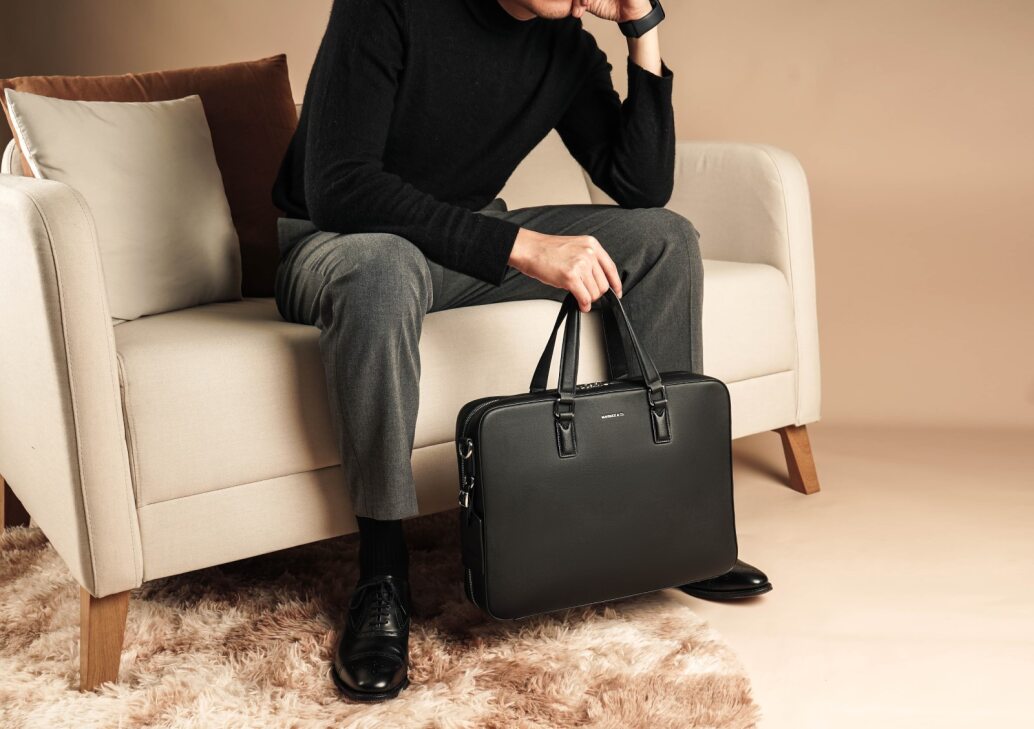
A good work bag comes down to five things: materials that survive daily wear, a layout that puts everything where your hand expects it, a carry system that does not tire you out, a finish that reads as professional, and a size that matches how you actually work. Get those right and the bag disappears into your day. Get them wrong and you notice it every morning.
This guide takes each of the five in turn, with the specifics that separate a bag you keep for years from one you replace next spring.
A work bag is only as good as what it is made from. Four materials do the job well, and each suits a different kind of week.
The top tier. Full-grain keeps the outermost layer of the hide intact rather than sanding it smooth, so it resists wear instead of flaking, and it develops a patina that makes the bag look better at year five than at month one. It is the heaviest option and the most expensive, and it is the one that lasts longest. The Windsor Deluxe Leather Briefcase is built from full-grain cowhide and fits a 16-inch laptop.
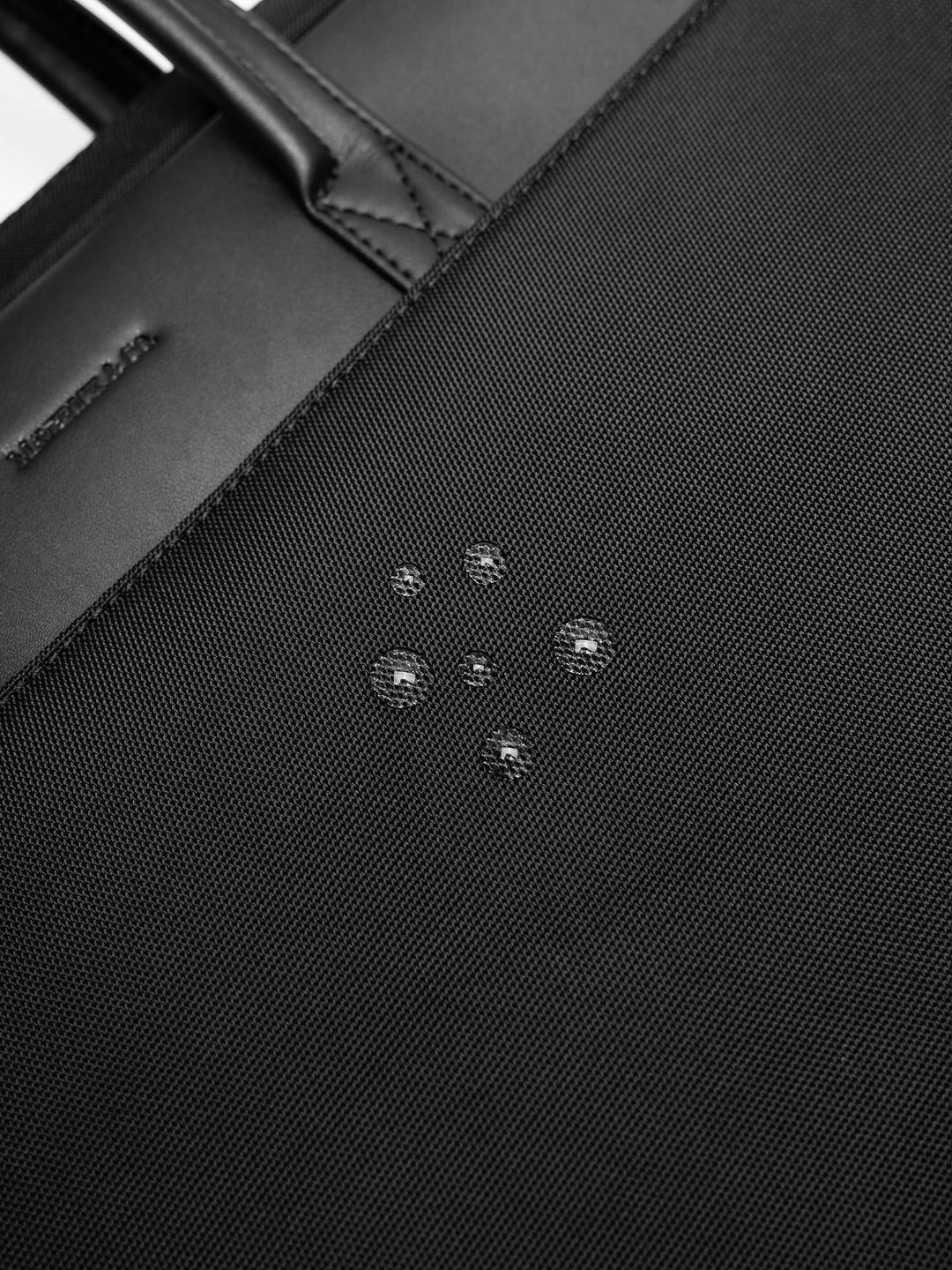
A cross-hatch finish pressed into the surface. It resists scuffs and water marks better than smooth leather and holds its shape, which is why it suits a structured briefcase that has to look the same after a rainy commute. The Manhattan Leather Briefcase and the dual-compartment Manhattan Double-Zip Leather Briefcase both use it.
A genuine alternative rather than a compromise — lighter than hide, and easier to make properly waterproof. The Vista Waterproof Backpack and the Explorer Light Backpack Plus both use vegan leather.
The lightest and most weather-resistant of the four, usually paired with leather trim so it still reads as formal. The Alpha Leather-Trimmed Briefcase is a nylon body with genuine leather trim.
Whichever you choose, look at the stitching before the logo. Reinforced seams at the strap anchors and the base corners are where bags fail first.
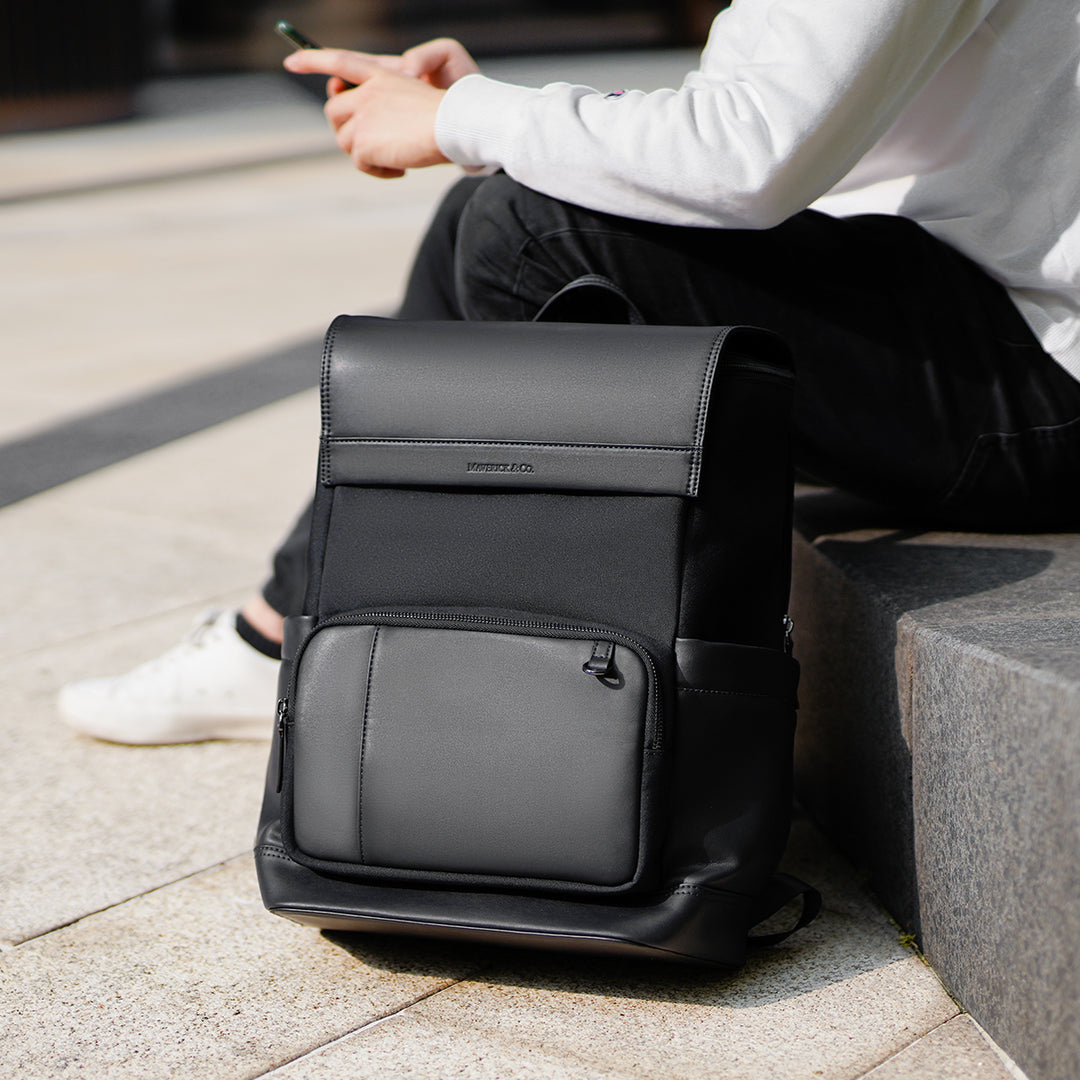
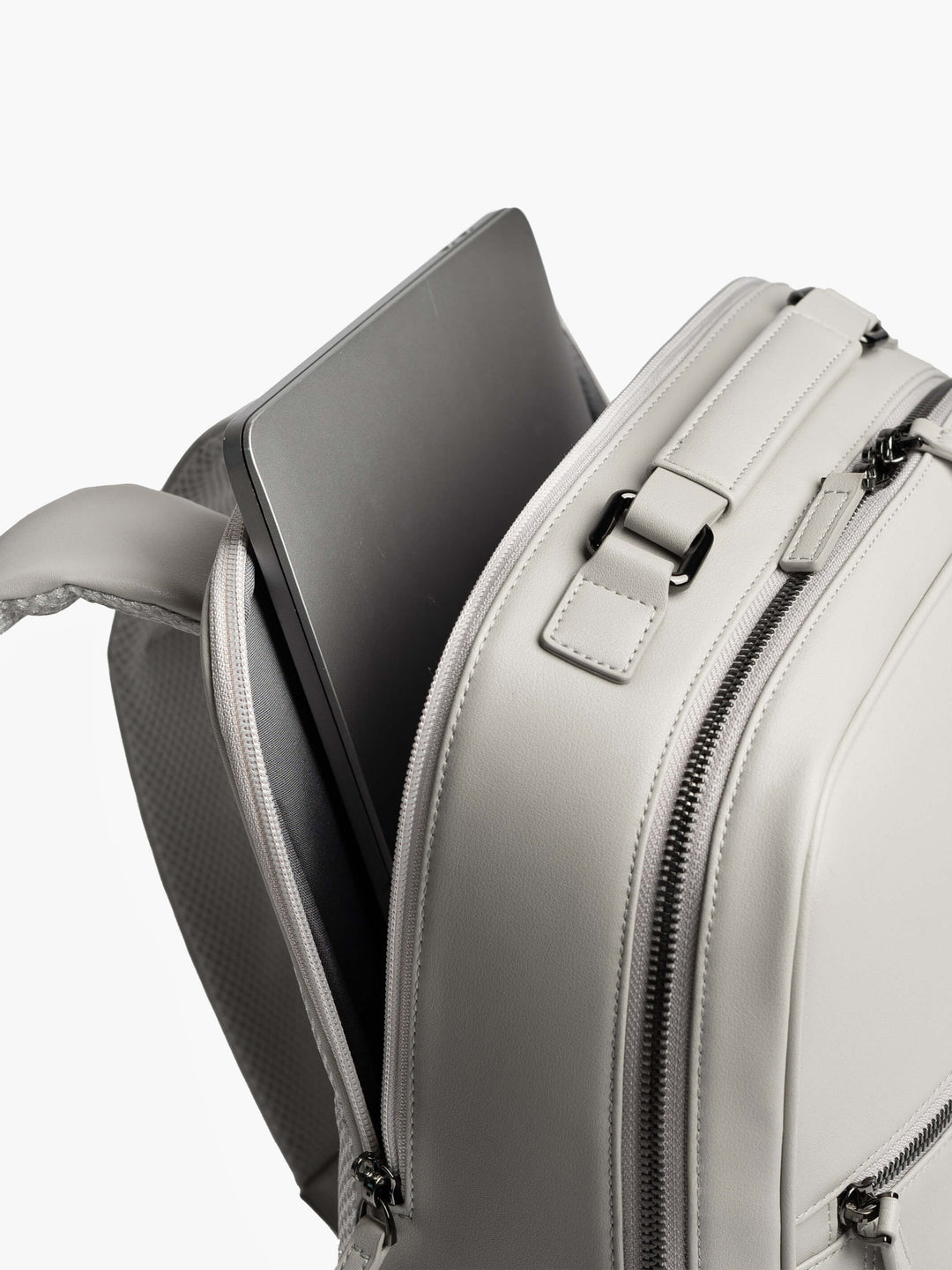
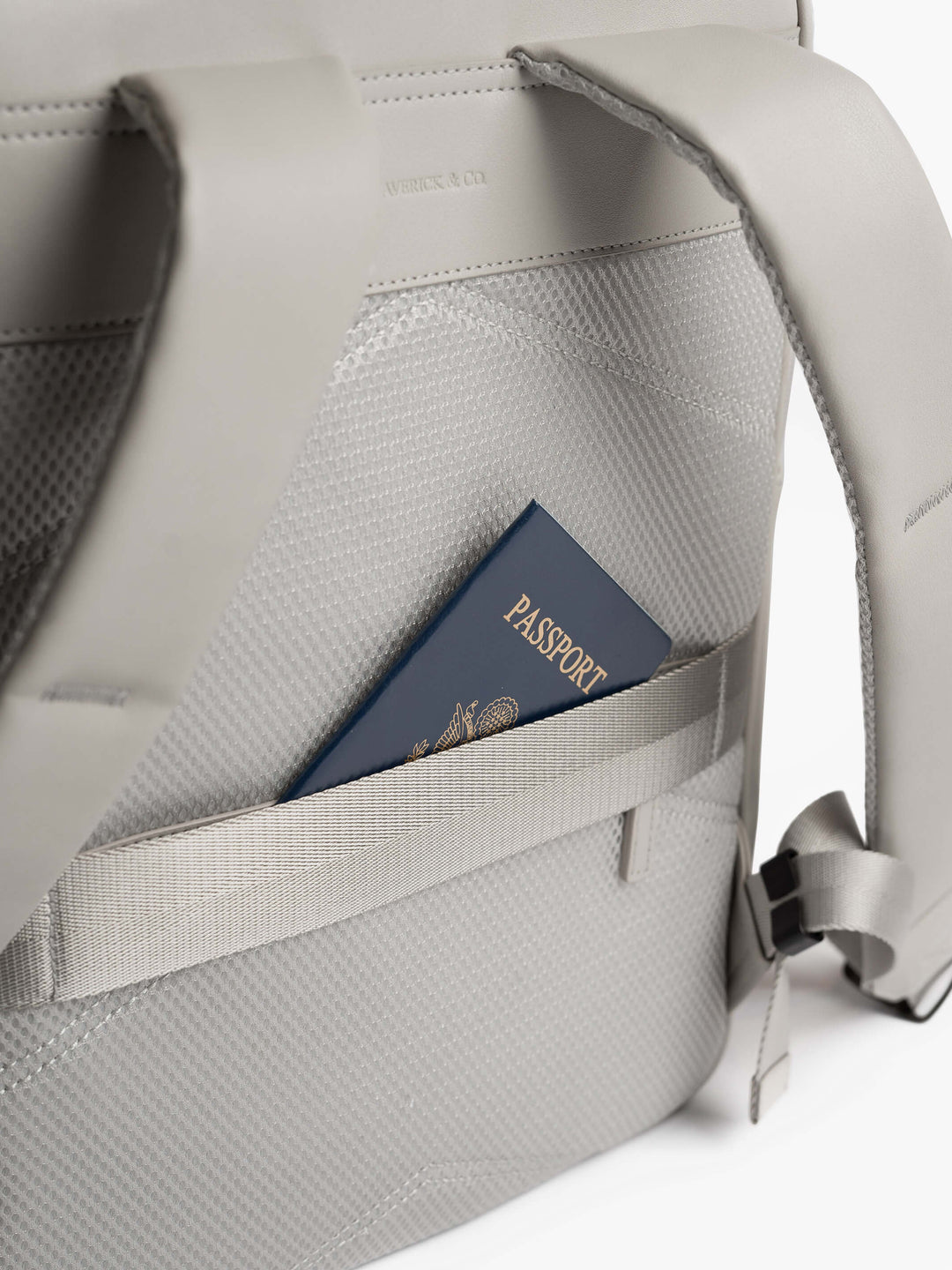
The best bags turn a rummage into a reach. What to look for:
The Explorer Light Backpack Plus covers the compartment side in a 16-litre body; the Vista Waterproof Backpack and the Explorer Light Backpack both add a trolley sleeve. If your bag has the space but not the structure, a modular insert such as the Nexus Tech Organizer gives cables and adapters a fixed home instead of a loose corner.
A poorly balanced bag drains more energy over a week than most people credit. Comfort is not a luxury feature here.
Match the carry system to your commute. The Manhattan Leather Briefcase has a detachable strap so it works hand-carried across a lobby and shoulder-carried on a train.
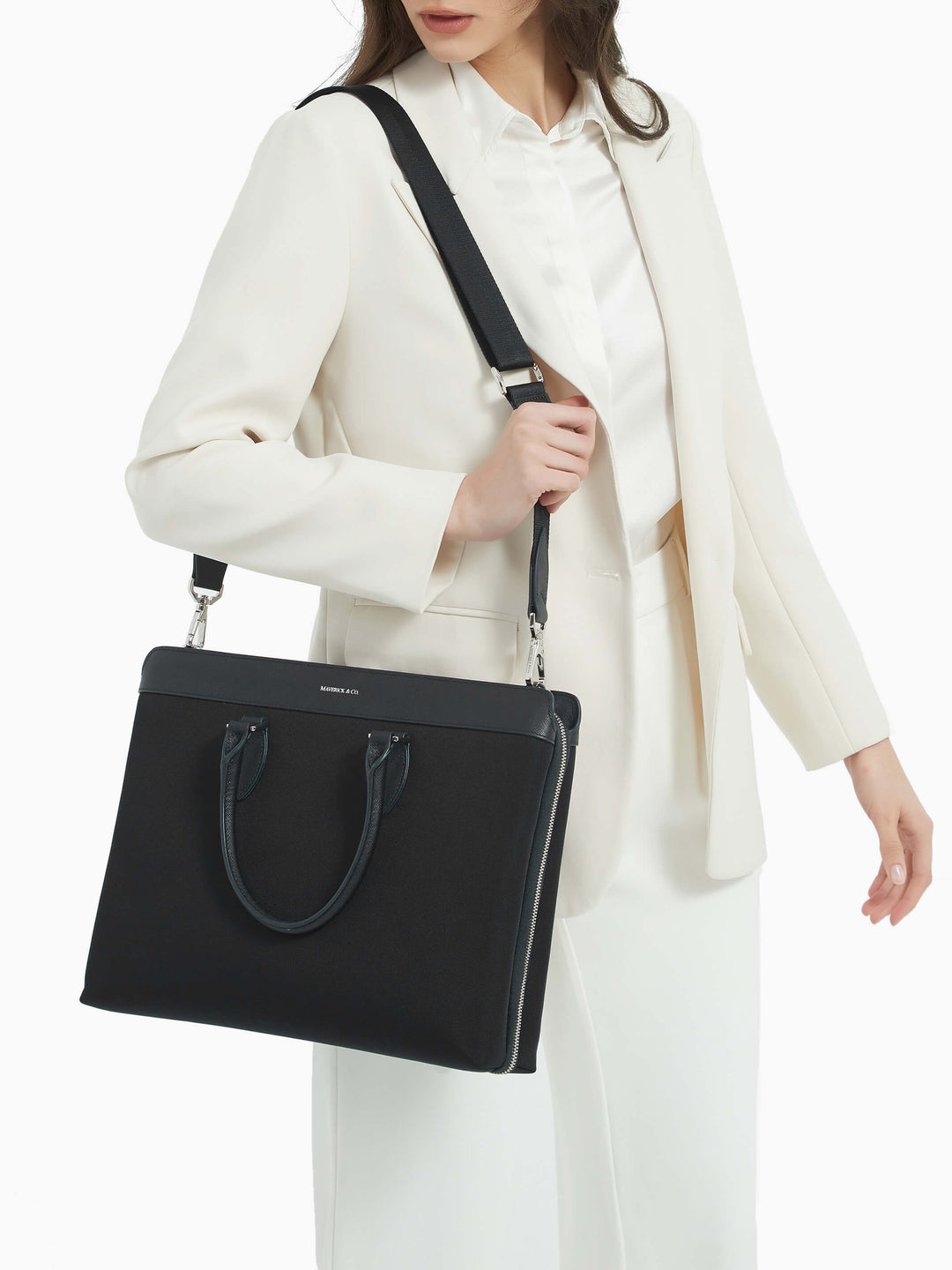
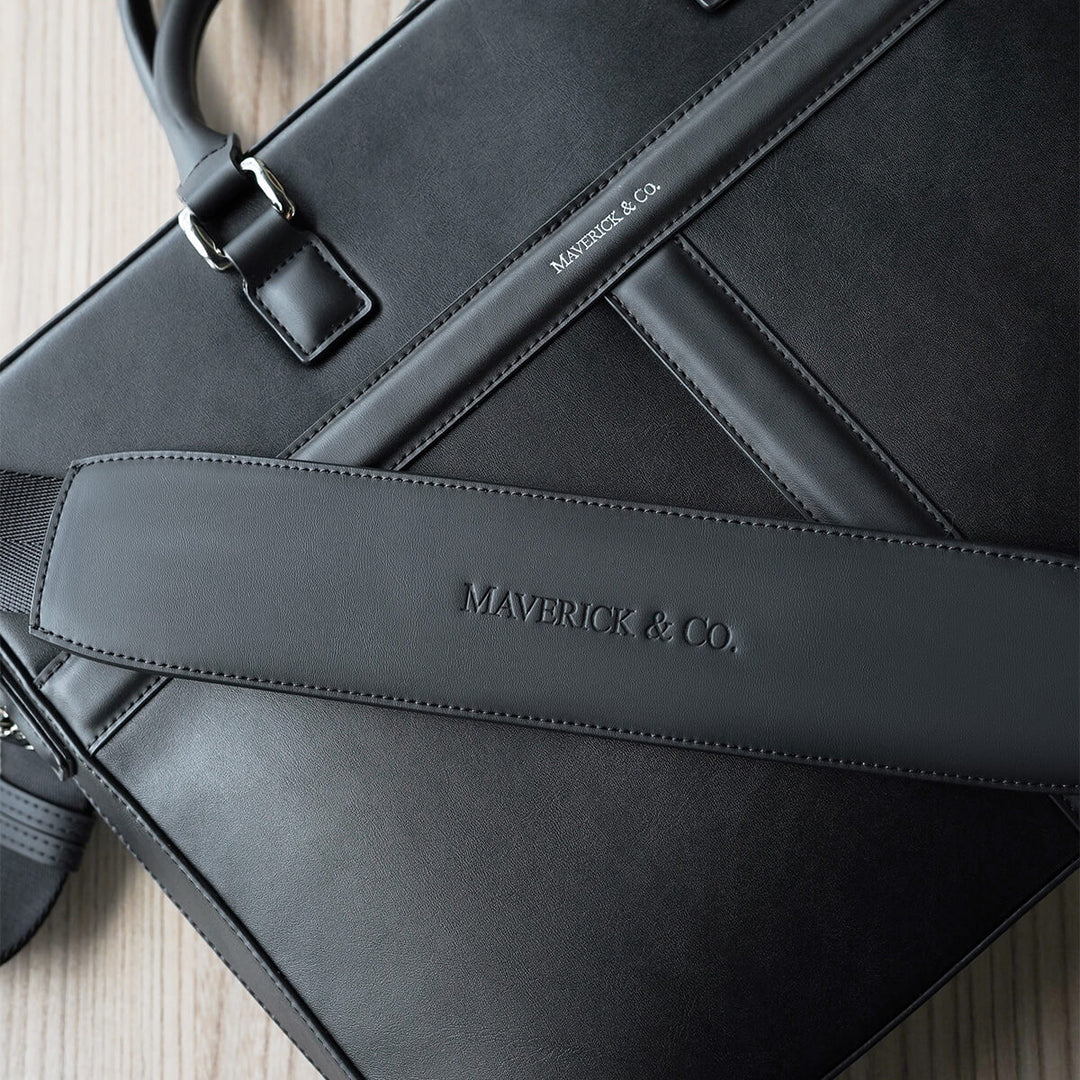
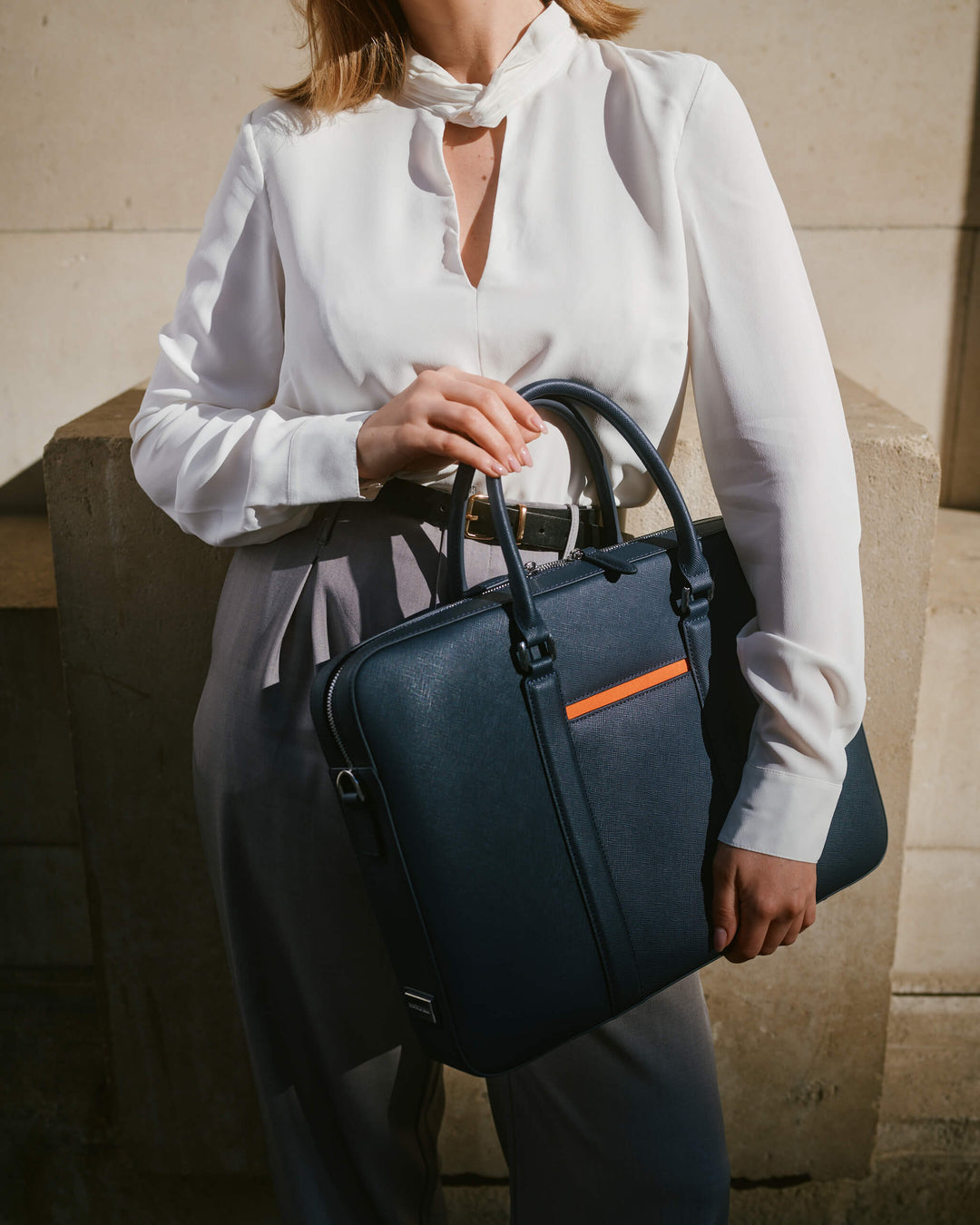
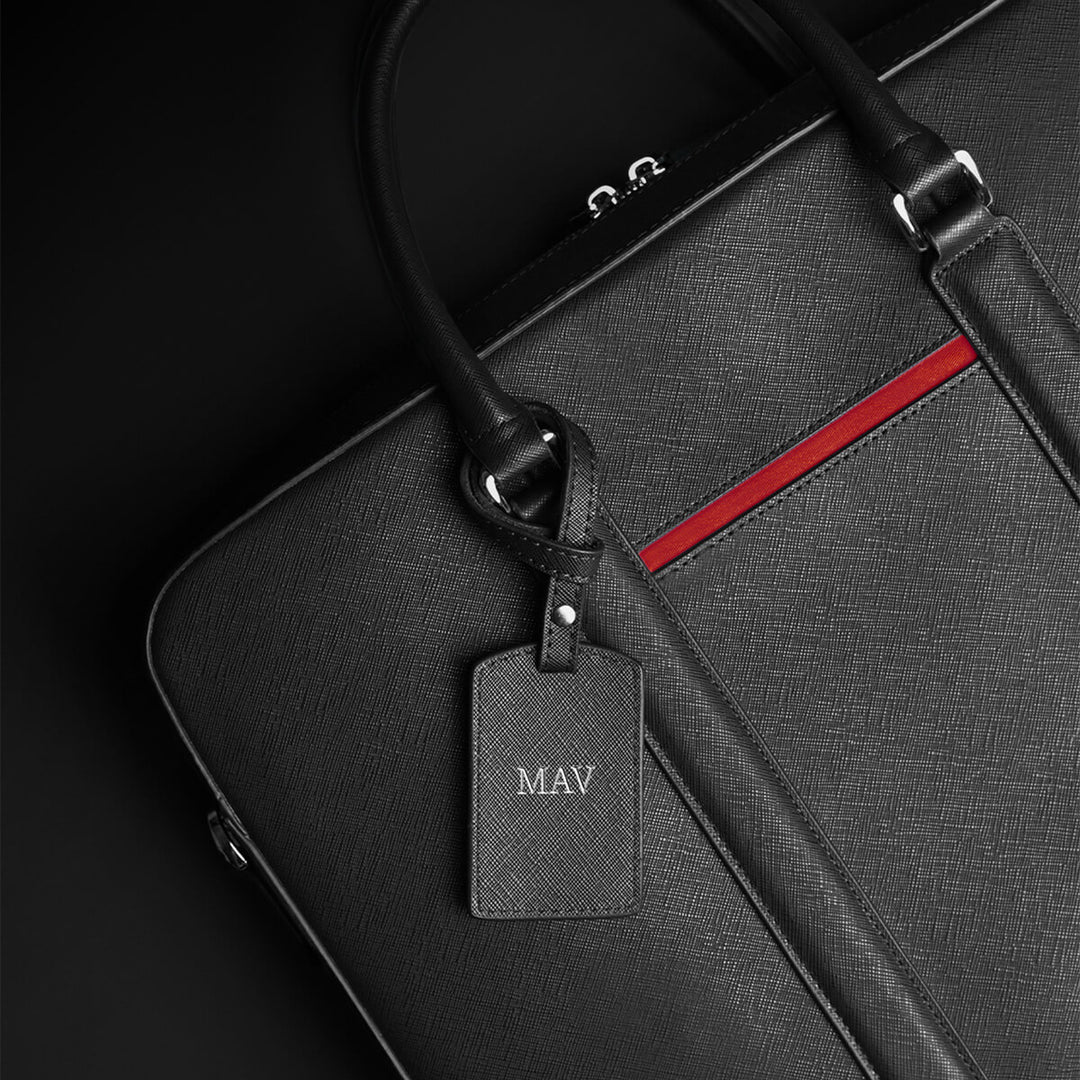
Your bag is one of the few things you carry into every room. It should not be the loudest thing in it.
An initial or a monogram makes a bag yours in a way a logo never does. Maverick & Co. offers laser engraving across most of the range — on the strap, on the luggage tag, or on the hardware — so the mark is visible to you and quiet to everyone else. It is also the practical answer to a room full of identical black briefcases.
The last feature is the one most guides skip: the bag has to match how you actually spend your week.
If your day looks like thisCarry thisWhyClient meetings, presentations, a formal officeStructured briefcaseReads as formal, sits flat on a table, opens without unpackingTwo devices, a long commute, hybrid daysBusiness backpackWeight on both shoulders, hands free, more volumeFrequent travel between citiesEither, with a trolley sleeveSlides onto a suitcase handle instead of being carriedLight days, one laptop, short hopsSlim brief or messengerLeast bulk for the least cargo
Capacity matters more than most buyers expect. An overstuffed bag loses its shape permanently, and a half-empty one sags. As a rough guide: around 8 litres suits a laptop and documents, 12 to 14 litres adds a change of clothes or a lunch, and 20 litres covers a work-to-gym day. The Manhattan Leather Briefcase sits at the compact end, the Vista Waterproof Backpack in the middle, and the Windsor Business Backpack at 20 litres for the longest days.
Want to see the principles applied to real working weeks? Read Elevate Your Workday: Finding Your Perfect Professional Bag.
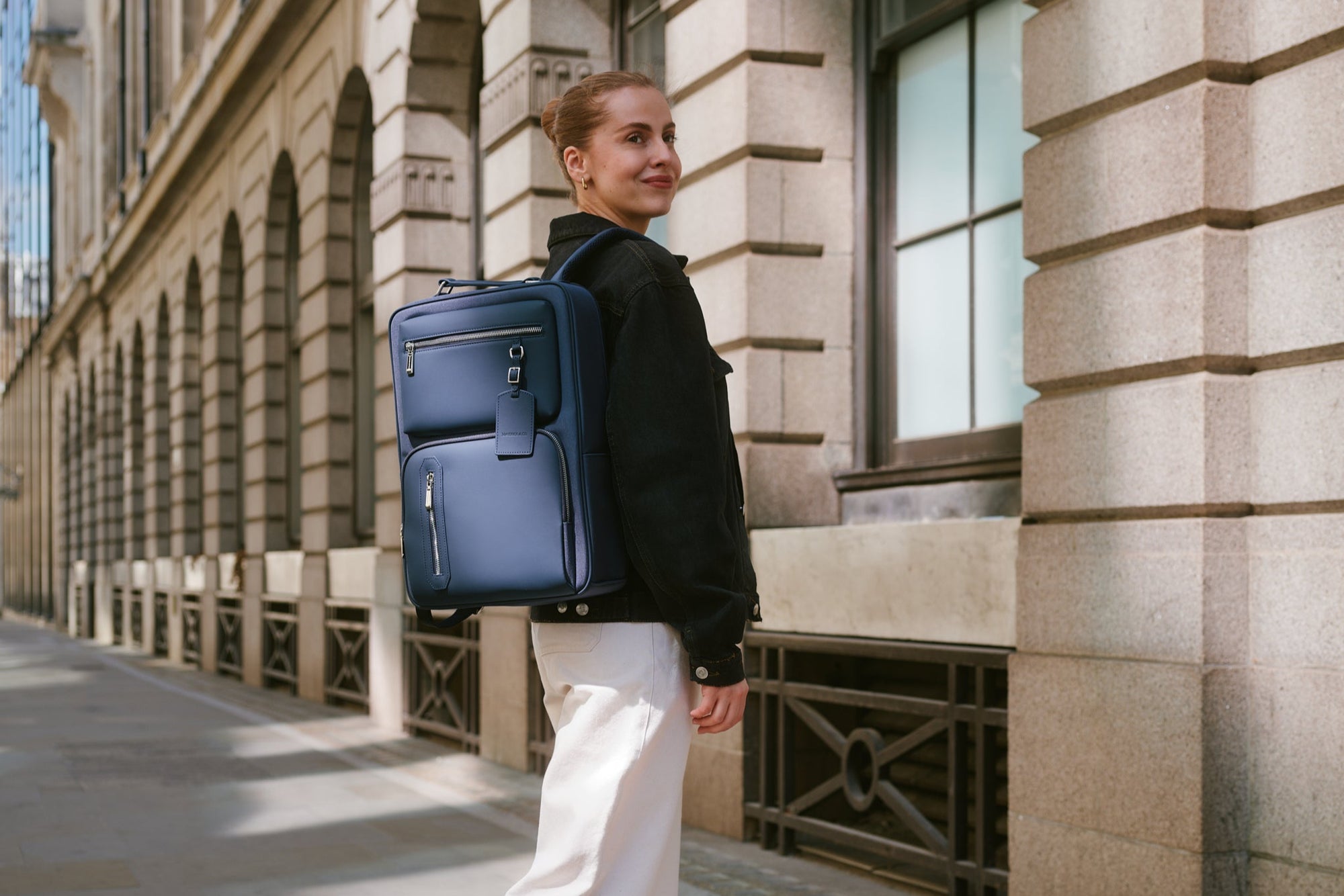
Start with a minimalist silhouette in premium leather or a water-resistant fabric, then check it against your daily load before you check it against your outfit. A clean design that fits your laptop and your commute stays stylish; one that does not will look wrong the first time you overstuff it. For more on this, see The Best Minimalist Work Bags.
A backpack, if you carry more than one device. Cushioned, separated compartments and weight spread across both shoulders protect hardware better on a long commute — the Windsor Business Backpack is built for that. For meetings and presentations, a structured briefcase such as the Manhattan Leather Briefcase is the better call: more formal, and it opens flat on a table.
Because both decide how the bag ages. A material that holds structure — full-grain or Saffiano leather, or a properly finished vegan leather — keeps its shape through years of loading and unloading. And a bag sized to your actual carry stops you overstuffing it, which is what stretches seams and permanently deforms a panel. Buying one size up "just in case" usually shortens the bag's life rather than extending its usefulness.
Keep the mark small and put it somewhere you see more often than anyone else does. Laser-engraved initials on the strap, the luggage tag or the hardware are enough to make the bag identifiably yours in a meeting room full of black briefcases, without turning it into a statement piece. Maverick & Co. offers engraving across most of the range.
Executives and anyone in a formal office are usually best served by a structured briefcase. Commuters, consultants and hybrid workers tend to do better with a lightweight ergonomic backpack. If you move between both in the same week, look for a briefcase with a detachable shoulder strap or a backpack restrained enough to carry into a client meeting.
Durability, organisation, comfort, professional finish, and the right fit for your role. Those five are what separate a bag you keep from a bag you replace. Work through them in order, be honest about how you actually spend your week, and buy the one that answers it.
Browse the full range of Maverick & Co. work bags to find yours.